A New Way to Write Data Into Glass
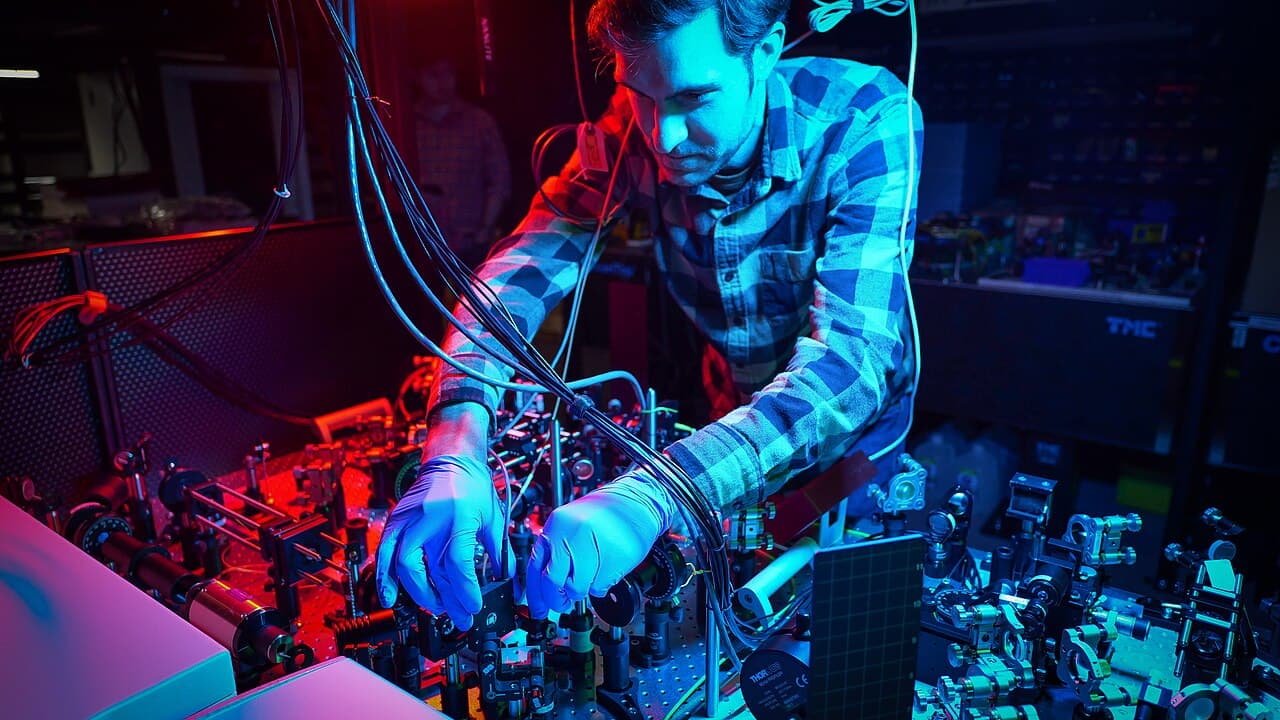
For nearly a decade, Microsoft Research has been developing Project Silica, a method of writing digital data into glass using ultrafast lasers instead of magnetic platters or flash memory. Until recently, the technology relied on expensive fused silica glass and a technique called birefringent voxels, which required multiple laser pulses per data point and a reader with three or four cameras to decode.
That changed with a breakthrough detailed in a paper published in the journal Nature and outlined by Richard Black, Partner Research Manager at Microsoft Research Cambridge, in a blog post in February. The team found a way to extend the technology to ordinary borosilicate glass, the same low-cost material used in kitchen cookware and oven doors, using a new encoding method called phase voxels. Rather than altering how glass polarizes light, phase voxels slightly change the physical structure of the glass itself, altering how light waves pass through it. Each mark now needs only a single laser pulse instead of several, and the data can be read back with a single camera rather than three or four.
The trade-off is capacity. According to detailed specifications reported by Tom's Hardware, the new phase-voxel method stores about 2.02TB of data across 258 layers in a 120mm-by-120mm borosilicate glass platter just 2mm thick, achieving a write throughput of 18.4 megabits per second per laser beam. That is lower than the roughly 4.8TB to 7TB Microsoft has previously demonstrated in fused silica platters of the same size using the older birefringent method, according to Help Net Security and Microsoft's own figures. Researchers have not yet decided whether future Silica systems will standardize on the cheaper, simpler phase-voxel approach or the higher-capacity birefringent one. Microsoft has also shown that splitting a laser beam to write multiple data points simultaneously, and applying machine learning to correct interference between closely packed marks, can push effective write speeds well beyond a single beam's limits.
Built to Outlast Civilizations, but Not Yet for Sale
The appeal of Project Silica is not speed but permanence. Because data is etched physically into the glass rather than stored magnetically or electrically, it is resistant to water, heat and magnetic fields that would destroy a conventional hard drive or tape. To estimate how long the data would survive, Microsoft researchers ran accelerated aging tests, baking glass samples at temperatures up to 500°C and measuring how quickly the recorded signal decayed. Tom's Hardware reported the tests calculated an activation energy of 3.28 electron-volts, with data remaining stable even at 554°F (290°C); extrapolated to room temperature, that points to a media lifetime beyond 10,000 years, far longer than the decade or so typically expected from magnetic tape or hard drives used for archiving.
Microsoft has demonstrated the technology's real-world potential a few times, including storing Warner Bros.' 1978 film Superman on a glass slide, and partnering with the Global Music Vault to preserve music recordings for future generations. It is also involved in the crowdsourced Golden Record 2.0 project, which aims to archive images, sounds and spoken languages from around the world. Likely applications include long-term storage of medical records, scientific research data, AI training datasets and film or music libraries for large publishers.
Despite the progress, Microsoft has been careful to temper expectations. As the company noted in its own announcement, the research phase is now complete, but there is no product launch date, no pricing and no named commercial partner yet. Building the technology into a real-world archival system would also require developing the low-power robotics and software needed to manage libraries of glass platters at scale, work Microsoft says it is now undertaking as it moves from research prototype toward a deployable system.